
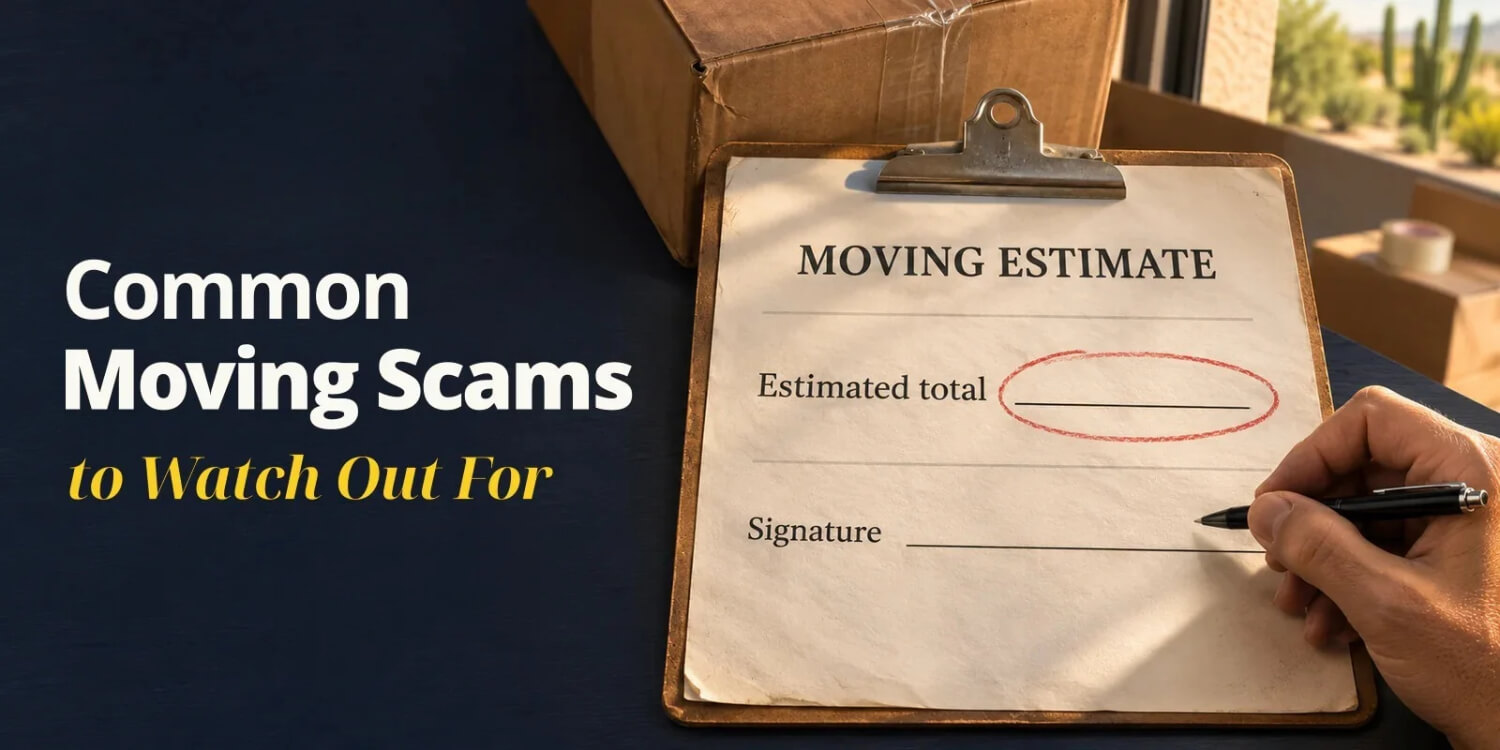
With the rise of technology and AI-powered tools, moving fraud is becoming more prevalent than ever. If you’re planning a move soon and need to hire professional help, it’s important to know how to spot red flags and avoid moving scams.
We’ve compiled a list of common moving scams that people fall victim to year after year. By reviewing this information, you’ll be better equipped to recognize these scams and prevent them from affecting your upcoming relocation.
What is a Moving Scam?
A moving scam occurs when movers or moving companies misrepresent their services to deceive customers. Fraudulent movers may use misleading language or unethical tactics to gain your trust. At the end of the move, they may overcharge you, hold your belongings hostage or even steal your items.
Common Types of Moving Scams
Moving scams happen more often than you might expect. Here are some of the most common ones and how they work:
Over-the-Phone Estimates
Moving companies that offer estimates over the phone instead of conducting an on-site inspection are often less reliable. Unreliable movers may offer customers a price that seems “too good to be true” and then charge them more at the end of the move.
Getting an in-home estimate will give you a more accurate idea of your moving expenses. If a company refuses to provide an in-home estimate, it could be a sign that the movers are not legitimate.
You should ask your movers to visit your home and provide a free moving quote. Once they have done so, request the quote in writing. This can help prevent the moving company from adding unexpected charges to the overall cost of your move. Details about additional charges may be hidden in the fine print, so make sure to carefully read everything provided to you in writing.
The Bait and Switch
With the bait and switch scam, a moving company offers you what appears to be a great estimate for your move. The price seems much better than other rates, making you more likely to hire them for the job. This is the bait!
At the end of your move, the company adds extra fees and charges. This, of course, is the switch. Companies use this tactic to attract customers by promising affordable services, only to increase the price significantly later. By the time the switch happens, your move has already been completed, leaving you stuck paying more than you originally expected.
Thin or Incomplete Contracts
Some fraudulent movers may provide you with a misleading contract that contains very few details. They may intentionally leave out important information and charge you an excessive amount at the end of your move. When reviewing the contract, make sure the estimated moving quote, additional fees and moving day information are clearly outlined. Be sure to read every detail of your contract carefully before signing any documents. Doing so will help protect both you and your belongings during the move. If you believe you’ve fallen victim to this moving company scam, review your rights and responsibilities.
Upfront Deposits & Cash-Only Pressure

Moving companies should never demand an excessively high upfront deposit or insist on cash-only payments. If the deposit is too high or the movers require you to pay the full cost of your move before loading your belongings onto the moving truck, you should consider hiring a different moving company.
A reputable moving company will likely not ask you to pay before your relocation. Some may require a small deposit of $100 to $200 to secure your move-out date. If the deposit exceeds 50% of the total cost, you should read customer reviews or check the company’s accreditation with the BBB.
If you’re paying by certified check, you may be asked to pay for the moving services before your belongings are unloaded at your destination.
Delayed or Never Delivered Belongings
This moving truck scam may be the worst of them all. Movers will come to your home, pack and load your belongings, and promise to deliver them “on time.” Later, they may claim that your belongings are at the back of the truck behind two other customers’ items, meaning you cannot receive your furniture until theirs has been delivered first.
Alternatively, if the mover has a licensing violation and the Department of Transportation impounds their truck during transit, your valuables will remain stuck on board until the truck is released. Either of these situations can result in your belongings being delivered weeks late or not at all.
Unmarked Trucks & Lack of Credentials

A fly-by-night mover will take your money, load your belongings, and then shut down their business and disappear, leaving your shipment either on the truck or in a private storage facility. The mover will essentially disappear with your money and belongings. If you’re lucky enough to find out where your belongings ended up, you may have to pay an excessive amount of money to retrieve them from the storage facility.
What to Do If Something Goes Wrong
If you fall victim to a moving broker scam, don’t panic. The first thing you should do is figure out where things went wrong. Moving brokers can be unreliable because they don’t actually own the moving company or work directly with the movers. Instead, they act as a middleman between you and the company. They offer you a good rate for moving services and then find movers willing to do the job for that price. Since you’re not dealing directly with the moving company, several problems can arise.
If you find yourself in this situation, you should:
- Gather all necessary documentation
- Take screenshots and print copies of emails and text messages exchanged with the broker
- Identify the moving company hired by the broker for your move
- File a complaint with the FMCSA
- Avoid making any additional payments
- Contact your state’s Attorney General
If your belongings are being held hostage, you should get the authorities involved.
How to Spot Red Flags Before Booking
Now that you know the common rip-offs and scams used by fraudulent movers, how can you avoid falling victim to them? Below are some tips for choosing a moving company for a happy and successful relocation:
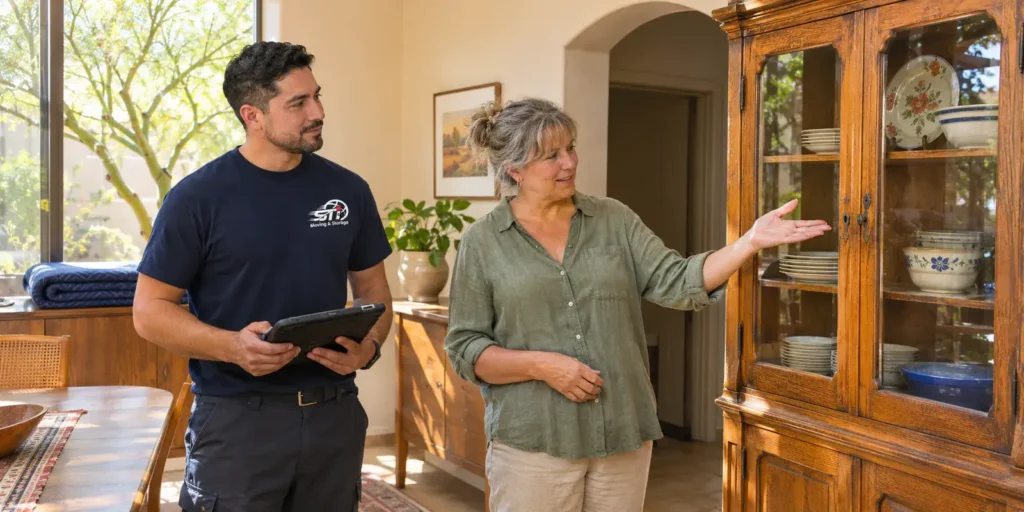
- Request an on-site estimate: STI Moving & Storage provides free on-site moving estimates.
- Check the company’s address: A legitimate moving company will have a physical address. Once you have the address, look it up on Google or visit the location to verify its legitimacy.
- Ask for recommendations from friends, family and neighbors: One of the best ways to find a reliable mover is to ask for recommendations from people who have recently moved.
- Ask your real estate agent: Real estate agents regularly help people move, making them a great source for recommendations on reputable movers.
- Get three in-home estimates: Request estimates from three different moving companies. If there is a significant difference in pricing, you can more easily spot potential fraud.
- Choose a mover who bases pricing on weight rather than cubic feet: This will help secure and lock in the initial estimate you receive.
- Check the mover’s complaint history: If a moving company has more than eight complaints on a website such as the Better Business Bureau, consider hiring a different company.
Tips to Protect Yourself (Trusted Practices)
Here are some simple steps you can take to avoid moving company scams:
- Do not pay a large deposit: A mover that demands a large upfront deposit is likely not trustworthy. If a mover asks for a large deposit, consider hiring a different company.
- Do not pay cash: Paying in cash leaves no record of the transaction. If your belongings aren’t moved or even worse, you never get them back, you may have no proof that you paid for the service.
- Ensure the truck is branded: Legitimate moving companies have moving trucks with their company branding and logos. To prevent fraudulent movers from driving off with your valuables, make sure the truck displays a company logo.
- Do not sign an incomplete contract: You would never sign a loan agreement or binding contract with blank spaces and the same rule applies to moving contracts. Make sure the contract is complete before signing anything.
- Do not agree to a thin contract: Make sure you sign a detailed moving contract that is at least two pages long. All your belongings should be listed in the contract.
- Buy extra insurance: A reputable mover will offer additional types of moving insurance to provide the highest level of protection in case something happens to your valuables during the move. STI Moving & Storage offers Full Valuation Coverage and Basic Liability Coverage.
How to Choose a Reputable Mover
Today’s economic climate is anything but certain. People struggling during this economic downturn are more likely to fall victim to moving scams. They often look for movers offering the best price, without realizing that deals that seem “too good to be true” often are.
Here are some tips to help you choose a mover who can provide you with just that:
- Start planning your move at least six to eight weeks in advance. This will give you enough time to compare estimates from different moving companies.
- Ask for references. Reach out to people around you who have recently moved and ask for recommendations on reliable movers.
- Make a list of the services you need. Consider everything from temporary storage to shipping your belongings to ensure you receive the most accurate price.
- Research companies thoroughly. Look for moving companies in your area that offer the specific services you need. Eliminate any companies that do not meet your requirements.
Why Choose STI Moving & Storage?
Since 2004, STI Moving & Storage has been helping individuals relocate throughout Phoenix. We’ve spent decades building our reputation in the moving industry and understand just how common moving scams can be.
If you’re looking for reliable movers to help with your next local, long-distance or cross-country move, you can count on us to get the job done. Contact us today for a free, no-obligation quote.